

Iran Says It Controls Strait of Hormuz, Sets Conditions for Ship Passage
The conflict between Iran, Israel, and the United States has intensified, with the strategic Strait of Hormuz becoming the center of global attention. Iran has announced that the waterway remains open but is now operating under “special conditions” for ships passing through the area.
Iranian officials claim their military has full operational control of the strait, a narrow passage connecting the Persian Gulf to global shipping routes. The statement comes after several weeks of military escalation between Iran and US-Israeli forces across the Middle East. Why the Strait of Hormuz Matters
The Strait of Hormuz is one of the most important energy shipping routes in the world. Around 18–20% of global oil supply passes through this narrow channel every day, making it vital for international trade and energy markets.
Any disruption in this waterway can cause: Rising global oil prices Supply chain disruptions Economic pressure on energy-importing countries
Recent tensions have already pushed oil prices higher and created uncertainty in global markets. Iran’s “Special Conditions” for Ships
Iranian authorities say the strait is not completely closed, but vessels must follow strict security conditions to pass through safely. According to reports, the restrictions mainly apply to ships linked to countries involved in attacks against Iran.
Some of the conditions reportedly include: Enhanced monitoring by Iranian naval forces Restrictions on ships from countries considered hostile .Increased security checks and communication with Iranian military units
Because of these risks, many commercial shipping companies have delayed or diverted their routes away from the region. Military Escalation in the Region
The crisis intensified after a series of airstrikes and retaliatory attacks across the Middle East. Reports indicate that US-Israeli forces have targeted Iranian military infrastructure, while Iran has responded with missile and drone operations in the Gulf region.
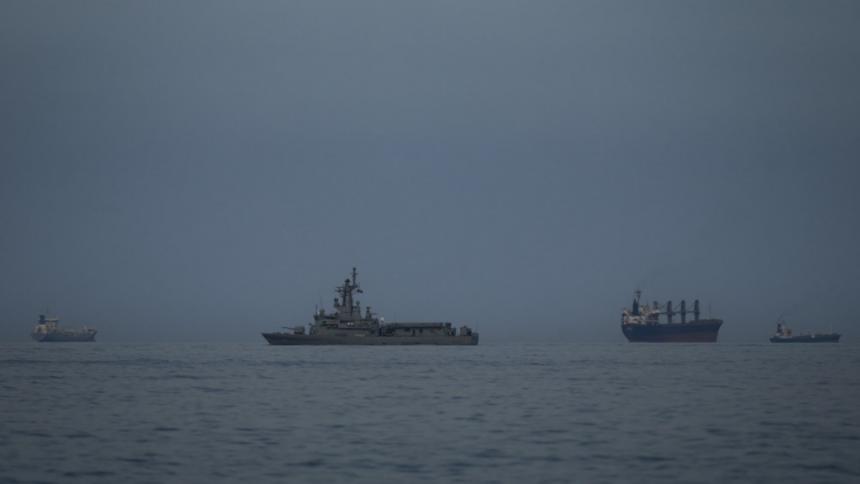
Meanwhile, Washington has proposed forming a multinational naval coalition to ensure safe passage through the Strait of Hormuz. However, several countries are still hesitant to send warships into the conflict zone. Global Concerns and Diplomatic Pressure
International leaders are urging de-escalation. France and other Western countries have called on Iran to restore safe navigation in the strait and avoid further attacks that could destabilize global trade routes.
Shipping companies, oil traders, and governments worldwide are closely monitoring the situation because even a partial disruption in the strait can impact global energy markets and transportation costs. Impact on the World Economy
Experts warn that if the crisis continues Oil prices could rise sharply .Global inflation may increase. Energy-dependent economies could face supply shortages
The Strait of Hormuz crisis highlights how regional conflicts can quickly affect the global economy and energy security.