


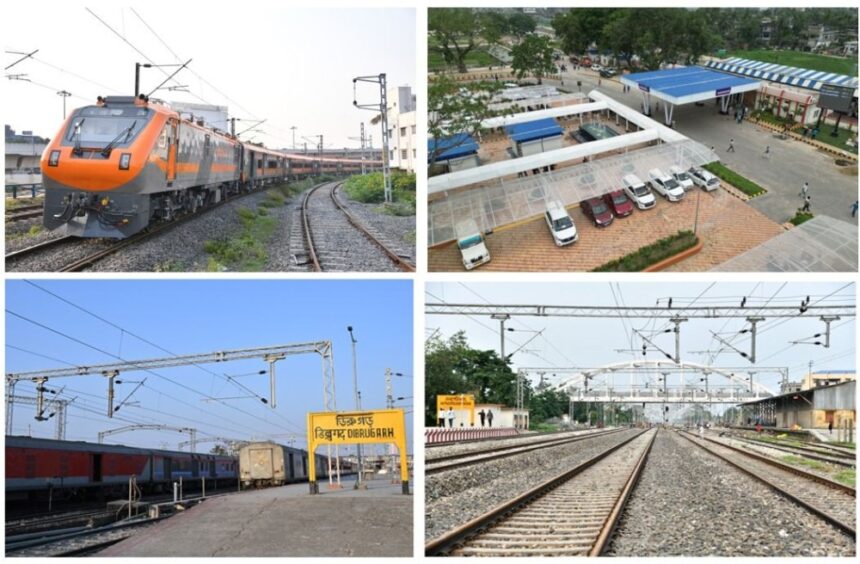
India is witnessing a major transformation in its transportation sector as Indian Railways achieves a significant milestone under its ongoing Indian Railways infrastructure boost initiative. With the completion of more than 1,900 kilometers of critical railway infrastructure projects, the country is taking a giant leap toward modern, efficient, and high-speed connectivity.
The Indian Railways infrastructure boost is not just about expanding tracks; it represents a broader vision of strengthening India’s logistics network, reducing travel time, and supporting economic growth. These newly completed projects include track doubling, electrification, new railway lines, and modernization of existing routes, all aimed at improving passenger and freight services.
One of the key highlights of the Indian Railways infrastructure boost is the focus on enhancing connectivity in remote and underdeveloped regions. By linking smaller towns and rural areas to major cities, Indian Railways is playing a crucial role in promoting regional development. Improved connectivity means better access to jobs, education, and healthcare, ultimately contributing to inclusive growth.
Another important aspect of the Indian Railways infrastructure boost is the push toward electrification. A large portion of the newly completed 1,900 km network has been electrified, reducing dependency on fossil fuels and promoting sustainable transportation. This aligns with India’s commitment to reducing carbon emissions and adopting eco-friendly infrastructure solutions.
The Indian Railways infrastructure boost also supports the rapid movement of goods across the country. Freight corridors and upgraded tracks enable faster and more efficient transportation of essential commodities, raw materials, and finished products. This improvement significantly benefits industries and boosts the overall economy.
In addition, the modernization efforts under the Indian Railways infrastructure boost include advanced signaling systems, improved safety measures, and better station facilities. Passengers can now expect a more comfortable and secure travel experience, which is essential in today’s fast-paced world.
Government initiatives and increased investment have played a vital role in driving the Indian Railways infrastructure boost. With a clear focus on long-term development, authorities are ensuring that railway projects are completed on time and meet global standards. This commitment is helping Indian Railways evolve into a world-class transportation network.
The Indian Railways infrastructure boost is also expected to create numerous employment opportunities. From construction to operations, thousands of jobs are being generated, contributing to economic stability and growth. This makes the initiative not only an infrastructure development project but also a social and economic driver.
Technology is another crucial factor in the Indian Railways infrastructure boost. The adoption of digital tools, automation, and smart systems is improving operational efficiency and reducing delays. Real-time tracking, online booking systems, and data-driven management are transforming the way Indian Railways operates.
Moreover, the Indian Railways infrastructure boost plays a strategic role in strengthening national integration. By connecting different parts of the country more efficiently, it fosters unity and cultural exchange. It also enhances tourism by making travel more accessible and convenient.
Despite these achievements, challenges remain. Land acquisition, environmental concerns, and project delays are some of the hurdles faced during the implementation of large-scale infrastructure projects. However, with continuous planning and policy support, the Indian Railways infrastructure boost is expected to overcome these challenges and achieve even greater milestones.
Looking ahead, the future of the Indian Railways infrastructure boost appears promising. With plans for high-speed rail corridors, bullet trains, and further electrification, India is on track to become a global leader in railway infrastructure. The government’s vision of a modern, efficient, and sustainable railway system is gradually becoming a reality.
In conclusion, the completion of over 1,900 km of railway projects marks a significant achievement under the Indian Railways infrastructure boost initiative. It reflects the country’s commitment to improving connectivity, driving economic growth, and enhancing the overall travel experience. As India continues to invest in its railway network, the benefits of this transformation will be felt across every corner of the nation.