


Narendra Modi Flags Off India’s Fastest Metro Service in Meerut, Boosting Regional Connectivity
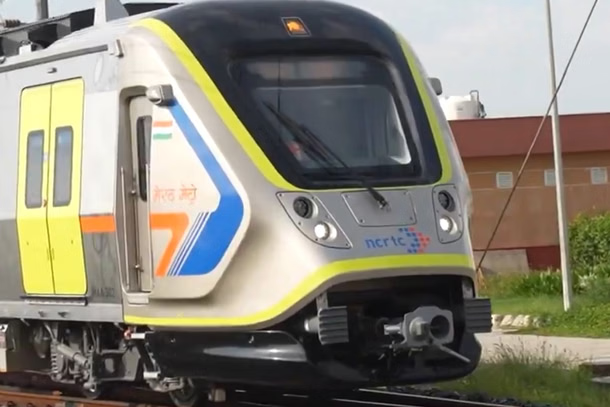
In a major boost to urban and regional transportation infrastructure, Prime Minister Narendra Modi on Sunday flagged off India’s fastest metro service in Meerut, capable of reaching a top operational speed of 120 kmph. The launch marks a significant milestone in India’s expanding rapid transit network and signals a transformative shift in mobility across western Uttar Pradesh.
- Narendra Modi Flags Off India’s Fastest Metro Service in Meerut, Boosting Regional Connectivity
- A Game-Changer for Urban Mobility
- Reducing Travel Time Significantly
- Modern Infrastructure and Passenger Amenities
- Economic Impact on Meerut and Surrounding Regions
- Environmental and Sustainability Benefits
- Integration with National Infrastructure Vision
- Technological Advancements and Safety Measures
- Public Response and Initial Ridership
- Strengthening the NCR Transportation Network
- A Symbol of India’s Infrastructure Ambition
- Looking Ahead
- Conclusion
The high-speed metro, part of the Regional Rapid Transit System (RRTS) corridor, is designed to dramatically reduce travel time between key urban clusters while offering commuters a modern, safe, and sustainable transport option. The project is being seen as a landmark step in strengthening connectivity between the National Capital Region (NCR) and adjoining cities.
A Game-Changer for Urban Mobility
The newly launched metro service stands out for its impressive speed of 120 kmph, making it the fastest operational metro service in India. While conventional metro systems in cities like Delhi, Mumbai, and Bengaluru typically operate at lower average speeds, this corridor aims to combine metro-style convenience with near intercity-train velocity.
The service is part of the larger Delhi–Meerut RRTS corridor, which is expected to cut down travel time between the two cities to less than an hour once fully operational. The Meerut segment represents a crucial link in this ambitious infrastructure initiative.
Addressing the gathering during the inauguration ceremony, the Prime Minister emphasized that modern infrastructure is central to India’s development vision. He highlighted how improved connectivity not only reduces travel time but also drives economic growth, employment, and regional integration.
Reducing Travel Time Significantly
For daily commuters, students, and professionals traveling between Meerut and Delhi, the new metro is expected to be transformative. Currently, road travel between the two cities can take two to three hours depending on traffic conditions. With the high-speed corridor, travel time will be drastically reduced, providing relief from congestion and unpredictability.
The fast acceleration and modern signaling systems allow trains to maintain higher speeds safely. Advanced track technology ensures smooth rides even at top speeds, while automatic train control systems enhance operational efficiency.
Modern Infrastructure and Passenger Amenities
The new metro service is equipped with state-of-the-art features designed to enhance passenger comfort and safety. Some of the key highlights include:
- Fully air-conditioned coaches
- Automatic doors and platform screen doors at select stations
- CCTV surveillance systems
- Real-time passenger information systems
- Dedicated seating for women and senior citizens
- Divyang-friendly facilities including elevators and tactile paths
Stations along the corridor have been built with modern architectural design and integrated transport planning, allowing seamless connectivity with buses, auto-rickshaws, and other last-mile options.
The emphasis on commuter experience reflects India’s evolving urban transport standards, aligning with global benchmarks.
Economic Impact on Meerut and Surrounding Regions
The launch of India’s fastest metro service is expected to generate far-reaching economic benefits. Improved connectivity often leads to:
- Increased real estate development
- Growth of commercial hubs
- Rise in employment opportunities
- Boost to local businesses
Meerut, traditionally known for its sports goods industry and manufacturing units, is likely to witness accelerated urban expansion. Enhanced connectivity with Delhi and other NCR cities may attract new investments, educational institutions, and corporate offices.
Infrastructure experts believe the metro corridor could transform Meerut into a major satellite city within the NCR framework, easing pressure on Delhi while distributing economic activity more evenly.
Environmental and Sustainability Benefits
One of the major advantages of high-speed metro systems is their environmental sustainability. By encouraging commuters to shift from private vehicles to public transport, the project aims to reduce traffic congestion and carbon emissions.
The corridor incorporates energy-efficient technologies such as regenerative braking systems that convert braking energy into usable electricity. Solar panels at stations and depots further contribute to reducing the project’s carbon footprint.
Urban planners argue that large-scale adoption of rapid transit solutions is essential for meeting India’s climate commitments and reducing urban pollution levels.
Integration with National Infrastructure Vision
The launch aligns with the government’s broader infrastructure push under initiatives aimed at modernizing transport networks across India. Over the past decade, metro rail networks have expanded rapidly across multiple cities.
The Meerut high-speed metro represents a new generation of rapid transit — faster, smarter, and regionally integrated. It reflects a shift from city-centric metro systems to regional mobility solutions that connect urban clusters.
Officials involved in the project stated that such corridors will play a crucial role in supporting India’s urbanization trends, as millions migrate to cities in search of employment and education opportunities.
Technological Advancements and Safety Measures
The metro system utilizes advanced European Train Control Systems (ETCS) and modern signaling mechanisms to ensure safety at high speeds. Trains are designed with aerodynamic structures to maintain stability and reduce noise levels.
Safety features include:
- Automatic train protection systems
- Emergency communication devices
- Fire detection and suppression systems
- Earthquake-resistant infrastructure
Engineers emphasized that despite its high speed, passenger safety remains the top priority.
Public Response and Initial Ridership
The inauguration ceremony drew large crowds, with residents expressing excitement about the new transport option. Social media platforms were flooded with images and videos of the first train run, with many calling it a “historic day” for Meerut.
Early commuters praised the comfort, cleanliness, and punctuality of the service. Many noted that the reduced travel time would significantly improve work-life balance, especially for those commuting daily to Delhi.
Authorities expect ridership numbers to increase steadily as more people experience the convenience of the new system.
Strengthening the NCR Transportation Network
The Delhi–Meerut RRTS corridor is part of a broader strategy to develop multiple rapid transit corridors connecting key cities within the NCR. Similar projects are planned or under development to connect Delhi with other neighboring cities.
Transport experts argue that such connectivity reduces dependency on road travel and promotes balanced regional development. By integrating metro systems with intercity rapid transit, the government aims to create a seamless mobility ecosystem.
A Symbol of India’s Infrastructure Ambition
The launch of India’s fastest metro in Meerut is not just about speed; it symbolizes the country’s ambition to modernize its infrastructure at scale. Large-scale projects like this demonstrate engineering capability, project management expertise, and long-term urban planning.
The Prime Minister, in his address, underscored that world-class infrastructure is vital for India’s journey toward becoming a developed nation. He noted that efficient transportation systems are foundational for economic competitiveness and social mobility.
Looking Ahead
As operations begin, authorities will closely monitor performance metrics including ridership, punctuality, and commuter satisfaction. Further extensions and connectivity enhancements are expected in the coming phases.
Urban development experts believe the project could serve as a model for other regional corridors across India. With increasing urban populations and growing mobility demands, high-speed metro systems may become a cornerstone of India’s transportation future.
Conclusion
The launch of the 120 kmph metro service in Meerut marks a transformative chapter in India’s transport evolution. By combining speed, safety, sustainability, and modern design, the project promises to redefine daily commuting in western Uttar Pradesh.
For Meerut’s residents, it represents convenience and opportunity. For India, it reflects progress and ambition. As trains begin their high-speed journeys across the corridor, they carry not just passengers, but also the promise of faster, cleaner, and more connected urban living.