


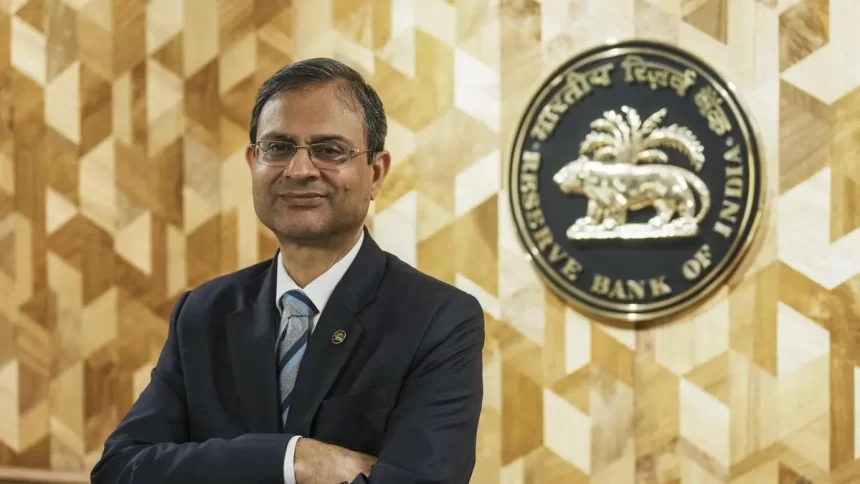
The Reserve Bank of India (RBI), under Governor Sanjay Malhotra, has announced its latest monetary policy decision, keeping the benchmark repo rate unchanged at 5.25%. The decision was taken by the Monetary Policy Committee (MPC) during its April 2026 meeting, signaling a cautious “wait and watch” approach amid global economic uncertainty.
The repo rate, which determines the cost at which banks borrow from the RBI, plays a crucial role in influencing loan interest rates, EMIs, and overall liquidity in the economy. By holding the rate steady, the central bank aims to balance inflation control with the need to sustain economic growth.
Governor Malhotra stated that while inflation has remained relatively stable in recent months, external risks—especially geopolitical tensions in the Middle East—continue to pose challenges. Rising crude oil prices and global market volatility have added pressure on India’s economy, prompting the RBI to avoid any drastic policy changes at this stage.
The RBI also revised its economic outlook, projecting GDP growth at around 6.9% for FY27, slightly lower than earlier estimates. Inflation is expected to remain within manageable levels, but the central bank remains vigilant about potential price shocks driven by global developments.
In addition to interest rate decisions, the RBI emphasized liquidity management as a key priority. The central bank plans to ensure that short-term rates remain aligned with the policy repo rate by managing liquidity in the banking system. This move is expected to improve financial stability and support credit flow to productive sectors.
The policy announcement had a mixed impact on financial markets. Benchmark indices like Nifty 50 and BSE Sensex showed cautious movement as investors reacted to the central bank’s stance. Market participants had largely anticipated a status quo, and the decision provided some clarity amid uncertain global conditions.
Experts believe that the RBI’s decision reflects a balanced approach. On one hand, maintaining rates supports economic stability and keeps borrowing costs steady for businesses and consumers. On the other hand, it allows the central bank to retain flexibility in case inflationary pressures rise in the future.
Governor Malhotra highlighted that the RBI remains committed to ensuring price stability while supporting growth. He reiterated that the central bank will continue to monitor domestic and global developments closely and take timely action if required.
Overall, the latest monetary policy underscores RBI’s cautious stance in a complex economic environment. While the unchanged repo rate offers relief to borrowers and stability to markets, the road ahead will depend heavily on global factors, inflation trends, and economic recovery momentum.