


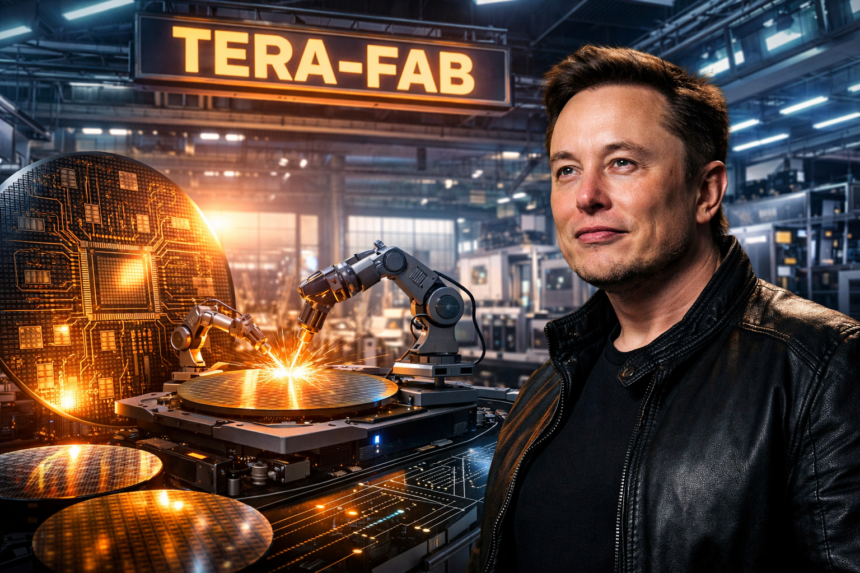
In a move that could reshape the global artificial intelligence landscape, Elon Musk is reportedly working on an ambitious project known as “Tera-Fab”—a massive semiconductor manufacturing facility designed to power his growing AI empire.
As AI systems demand unprecedented computing power, Musk’s vision is clear: control the infrastructure, control the future. With Tera-Fab, he aims to reduce reliance on external chip suppliers and build a vertically integrated ecosystem for AI development.
“Tera-Fab” is expected to be a next-generation chip fabrication plant capable of producing advanced AI processors at scale. Unlike traditional fabs, this facility is rumored to focus specifically on high-performance AI chips, which are essential for training large language models, autonomous systems, and robotics.
Industry insiders suggest that Tera-Fab could rival facilities operated by major semiconductor players, positioning Musk as a serious contender in the chip manufacturing space. Why Chips Matter More Than Ever
Artificial intelligence today runs on powerful chips, often supplied by companies like NVIDIA and AMD. These chips handle massive data processing tasks required for machine learning and deep learning.
However, global demand has surged, leading to shortages and rising costs. By building his own chip factory, Musk can:
Ensure a steady supply of AI chips . Reduce dependency on third-party manufacturers . Optimize hardware specifically for his AI models . Lower long-term costs
This strategy mirrors how tech giants are increasingly designing their own silicon to stay competitive. Fueling Musk’s Expanding AI Ecosystem
Musk’s interest in AI goes far beyond theory. His ventures—including Tesla and xAI—are deeply reliant on cutting-edge AI technologies. Tesla uses AI for autonomous driving systems . xAI is developing advanced AI models to compete globally
“Tera-Fab” could serve as the central engine powering these innovations, ensuring that all Musk-led companies have access to the computing power they need. Global Competition and Strategic Implications
The race for AI dominance is intensifying, with countries and corporations investing billions into semiconductor infrastructure. By entering the chip manufacturing space, Musk is stepping into a highly competitive arena dominated by established players.
Experts believe this move could .Shift the balance in the global AI race .Impact existing chip suppliers .Accelerate innovation in AI hardware
At the same time, building and operating a fab of this scale is extremely complex and expensive, often requiring billions of dollars and years of development. Challenges Ahead While the vision is bold, Tera-Fab faces significant hurdles .Massive investment requirements .Technical complexity in chip manufacturing .Supply chain dependencies .Regulatory and geopolitical factors
Even the world’s leading semiconductor companies take years to perfect advanced fabrication processes. Musk will need top-tier talent and strategic partnerships to succeed. What This Means for the Future of AI
If successful, Tera-Fab could mark a turning point in how AI systems are built and scaled. Instead of relying on external suppliers, companies may increasingly move toward in-house chip production.
For Musk, this is more than just a factory—it’s a long-term bet on controlling the core infrastructure of intelligence.