

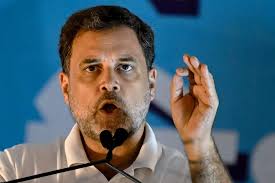
The recent increase in commercial LPG cylinder prices has sparked a political confrontation in India, with Congress leader Rahul Gandhi strongly criticizing the central government. He accused the administration of putting additional financial pressure on small businesses and indirectly on the public, especially at a time when economic concerns are already rising.
Rahul Gandhi linked the price hike to political timing, suggesting that such decisions reflect misplaced priorities. He stated that rising fuel costs are affecting small traders, food vendors, and service providers who rely heavily on commercial LPG cylinders for daily operations. According to him, these cost increases ultimately burden the common people as businesses are forced to raise prices.
The price hike applies specifically to commercial LPG cylinders, typically used in hotels, restaurants, and catering services. While domestic LPG prices for households remain unchanged in many cases, the increase in commercial cylinder rates can have a ripple effect across the economy. Businesses facing higher input costs often pass those expenses on to consumers, leading to increased food prices and service charges.
Industry experts point out that such price changes are usually influenced by global energy markets. Factors like crude oil prices, supply disruptions, and currency fluctuations play a significant role in determining LPG rates. Government sources have often maintained that oil marketing companies revise prices based on international benchmarks rather than political considerations.
However, opposition leaders argue that repeated fuel price hikes add to inflationary pressure and worsen the financial strain on ordinary citizens. They claim that small businesses, already recovering from past economic disruptions, are once again facing uncertainty due to rising operational costs.
The issue has gained importance as political activity intensifies across the country. Rising inflation, unemployment concerns, and cost-of-living challenges are becoming key talking points for opposition parties. The LPG price hike has added fuel to this debate, with leaders using it to question the government’s economic policies.
For many citizens, the impact is indirect but real. Increased costs in restaurants, street food stalls, and local services can affect daily expenses. Small business owners, in particular, are worried about maintaining profitability without losing customers due to higher prices.
As the discussion continues, the LPG price hike is likely to remain a significant issue in public and political discourse. Whether driven by global market forces or policy decisions, its effects are being felt across different sections of society, making it a sensitive and widely debated topic.