


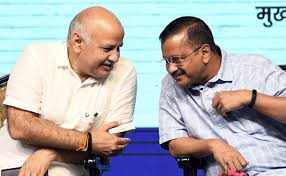
In a major development in the high-profile Delhi excise policy case, a Delhi court has discharged all accused persons, including Chief Minister **** and former Deputy Chief Minister ****. The court also pulled up the **** (CBI) for alleged lapses in its investigation.
The decision comes after months of intense political debate, legal proceedings, and public scrutiny surrounding the controversial Delhi liquor policy.
Background of the Case
The case pertains to the now-scrapped Delhi Excise Policy 2021–22, which was introduced by the Delhi government with the aim of reforming the liquor trade in the national capital. The policy intended to increase revenue, curb black marketing, and streamline licensing procedures by involving private players more actively.
However, opposition parties alleged irregularities in the formulation and implementation of the policy. It was claimed that undue benefits were extended to certain private liquor vendors and that kickbacks were involved. Following these allegations, the **** registered a case and began its probe.
The controversy soon escalated into a major political battle between the Aam Aadmi Party (AAP) and the Bharatiya Janata Party (BJP), with both sides accusing each other of political vendetta and corruption.
Court’s Observations
While delivering its order, the Delhi court reportedly observed serious gaps in the investigation conducted by the CBI. The court noted that the prosecution failed to present sufficient and concrete evidence to establish a prima facie case against the accused.
According to the court, mere allegations and procedural irregularities were not enough to sustain criminal charges. The judge emphasized that investigations must be thorough, impartial, and supported by clear documentary and material evidence.
The court’s remarks questioning the investigative process have sparked fresh discussions about the standards and accountability of central agencies in politically sensitive cases.
Relief for Kejriwal and Sisodia
For ****, the court’s decision provides significant political relief. The Chief Minister had consistently maintained that the case was politically motivated and aimed at destabilizing his government.
Similarly, ****, who had earlier resigned from his ministerial post following his arrest in connection with the case, welcomed the decision. A senior leader of the Aam Aadmi Party and a key architect of Delhi’s education reforms, Sisodia had described the allegations as baseless.
AAP leaders have termed the court’s ruling a “victory of truth,” asserting that the charges were fabricated to tarnish the party’s image.
Political Reactions
The ruling has triggered sharp political reactions across party lines.
AAP leaders celebrated the discharge as vindication and accused the Centre of misusing investigative agencies to target opposition leaders. Party spokespersons claimed the court’s observations exposed flaws in the investigation and proved their long-standing claims of political conspiracy.
On the other hand, opposition voices maintained that legal processes should run their course and emphasized that investigative agencies act independently.
Political analysts believe the verdict could have significant implications for upcoming electoral battles in Delhi and beyond. The case had become a central talking point in national politics, symbolizing the broader debate over corruption and the role of investigative agencies.
Impact on Governance and Public Perception
The Delhi excise policy case had far-reaching consequences. Apart from legal battles, it led to the rollback of the policy and reversion to the old excise system. The issue also affected governance in the capital, with senior ministers embroiled in legal proceedings.
Now, with the discharge order, the AAP government is likely to refocus on governance and public welfare initiatives. However, the broader questions surrounding policy transparency, accountability, and regulatory oversight in excise matters remain relevant.
The episode has also sparked public debate on the balance between political accountability and legal scrutiny. Observers note that strong investigative standards and judicial oversight are essential to maintaining public trust in democratic institutions.
What Happens Next?
While the court has discharged the accused in this case, legal experts suggest that the prosecution may explore options such as filing an appeal if grounds exist. The coming weeks will determine whether the matter concludes here or sees further legal proceedings.
For now, the ruling marks a significant chapter in one of the most closely watched political cases in recent years. The discharge of prominent leaders like **** and **** not only reshapes the legal narrative but also carries substantial political weight.
As the dust settles, all eyes will remain on how this verdict influences the political landscape and the ongoing discourse around governance, corruption, and institutional accountability in India.